
National Project Coordinating Unit (NPCU) together with national implementing entities validate monitoring, evaluation and learning manual to strengthen results-based project implementation
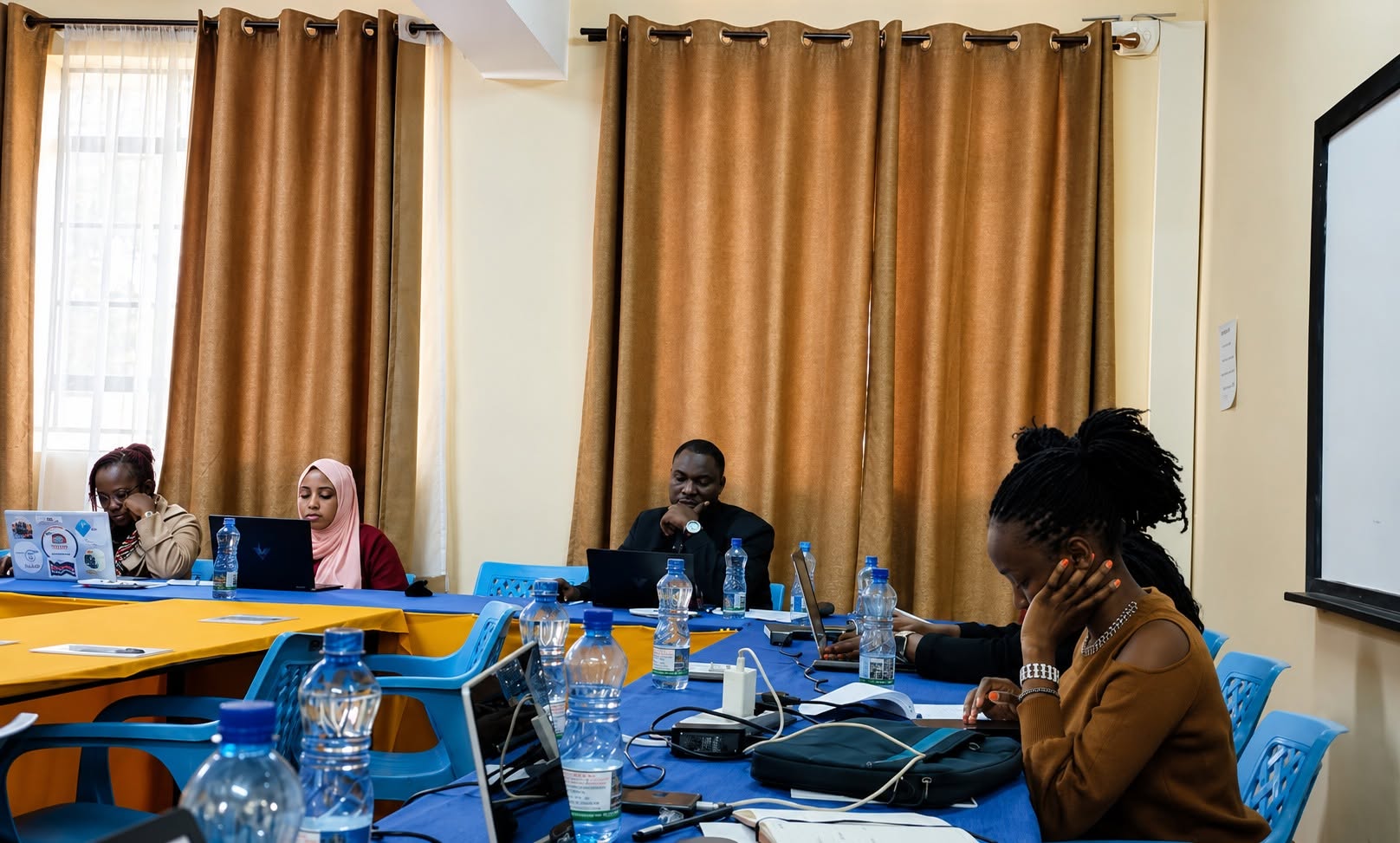
Kenya Watershed Services Improvement Project (KEWASIP) has convened a technical validation workshop in Machakos, bringing together the State Department for Forestry and National Implementing Entities to review and finalize the project's draft Monitoring, Evaluation and Learning (MEL) Manual.
The workshop marks a significant step towards strengthening results-based management and ensuring effective monitoring of the project's implementation.
KEWASIP is a five-year World Bank-funded project implemented by the State Department for Forestry under the Ministry of Environment, Climate Change and Forestry.
The project responds to the urgent need to restore degraded landscapes, strengthen the sustainable management of Kenya's natural resources, and enhance ecosystem services that build climate resilience while improving livelihoods for communities across project areas.
Recognizing that effective monitoring and evaluation are critical to achieving this objective, the project has developed a comprehensive Monitoring and Evaluation Manual to provide a standardized framework for tracking implementation progress, measuring results, supporting evidence-based decision-making, ensuring accountability, and meeting both Government of Kenya and World Bank reporting requirements.
The draft manual provides detailed guidance on data collection methodologies, performance indicator measurement, reporting procedures, data quality assurance, beneficiary feedback management, institutional roles and responsibilities, learning and knowledge management, and the use of monitoring information to inform project planning and decision-making throughout implementation.
The validation workshop seeks to review, refine, and finalize the manual to ensure it provides a practical, comprehensive, and harmonized framework for monitoring, reporting, learning, and performance management across all implementing entities.
Once validated, the manual will guide the measurement and reporting of the project's key performance indicators, all of which are aligned with KEWASIP's Project Development Objective (PDO): to expand the area under sustainable land and watershed management and improve the livelihoods of communities in the project areas.
Among the key indicators to be tracked through the manual are:
• 150,000 hectares of private and community land brought under Sustainable Land and Watershed Management (SLWM);
• 50,000 hectares of degraded public land rehabilitated;
• A reduction of 52,000 tons of carbon dioxide equivalent (tCO₂e) in net greenhouse gas emissions annually;
• The Project targets 750,000 beneficiaries with enhanced climate resilience overall. Of these: 100,000 beneficiaries adopting Sustainable Land and Watershed Management practices; and 25,000 beneficiaries supported to engage in diversified livelihood activities.
The workshop is expected to produce several key outputs, including a technically reviewed draft KEWASIP Monitoring and Evaluation Manual, validated performance indicators and reporting procedures, agreed revisions to monitoring tools and reporting templates, harmonized institutional roles and responsibilities for monitoring and evaluation, and a finalized manual ready for approval.